Start With The Monitoring Question
Asbestos air testing examines airborne fibre levels using a defined sampling and analytical method. It may support work monitoring, investigation after a disturbance or clearance following relevant removal work. The correct test depends on what has happened and what decision the result needs to support.
An air test cannot locate every asbestos-containing material in a building. It also cannot replace a survey before drilling, strip-out or demolition. If your question concerns a ceiling, tile or panel, material sampling may be the appropriate starting point instead.
Types Of Monitoring To Discuss
Background monitoring can describe conditions at a particular time before work. Leak monitoring may be used around an enclosure during controlled work. Personal monitoring assesses exposure in relation to an individual’s work, and reassurance sampling may be relevant after a particular event or activity.
These purposes are not interchangeable. An analyst needs the site circumstances, work details and relevant history to design the sampling. A generic request for a pass certificate without explaining the problem can produce evidence that does not answer the right question.
Hsg248 And Competent Analysis
HSE publication HSG248, Asbestos: The Analysts’ Guide, covers analytical procedures and clearance work. It is used alongside the Control of Asbestos Regulations 2012. The proposed analytical organisation should hold appropriate accreditation for the work being commissioned, with its actual scope checked.
The independence of the analyst matters when assessing removal work. Discuss appointment directly and identify who will receive the findings. Agree how unsuccessful inspection stages, further cleaning or additional attendance will be handled so the project is not planned around an assumed pass.
Four-Stage Clearance After Relevant Removal
Formal four-stage clearance is more than taking an air sample. It involves an assessment of the site and completed work, a detailed visual inspection, clearance air monitoring and the final assessment after the enclosure is removed. Each stage has a purpose within the handover process.
Where this process applies, reoccupation depends on completing the necessary stages and issuing the relevant certification. An air result alone does not replace a failed visual inspection. The analyst should have the survey and removal scope needed to assess the correct area.
How To Arrange Air Testing
First, explain the monitoring reason, location and whether removal or a disturbance has occurred. Provide the existing survey, work plan and any earlier analytical results. Describe the occupancy and how access to the affected area is currently controlled.
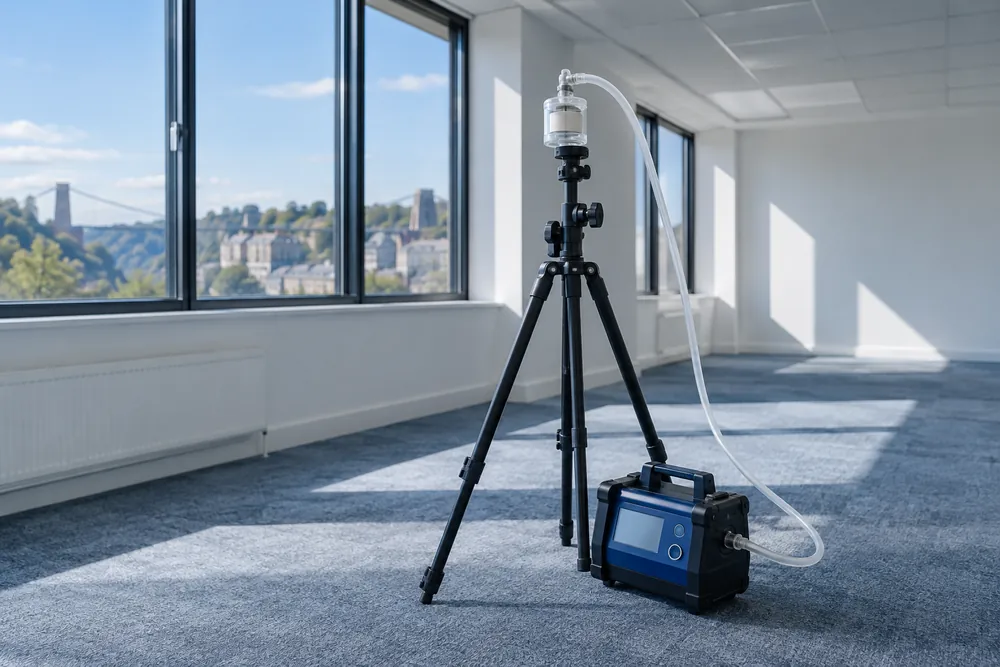
Next, agree the monitoring approach and site arrangements with the analyst. Sampling equipment must be positioned and operated to suit the purpose and method. Building activity, access and any work controls need to be considered rather than changed casually during the test.
Finally, obtain the report and ask for an explanation of the results and limitations. Keep the sampling location, date and site conditions with the project record. Where further cleaning or assessment is needed, agree those actions before the affected area is released.
What The Result Can And Cannot Show
An analytical report describes the samples taken under stated conditions. It does not prove that a building contains no asbestos, or that future disturbance will be harmless. A quiet room with intact materials presents a different situation from work that opens concealed insulation or breaks a board.
Standard fibre-counting methods also have analytical limitations that should be explained by the analyst. Avoid treating a simple number as a complete assessment of a complex incident. The conclusion needs to be read alongside visual findings, sampling purpose and any other evidence collected.
Cost And Preparation
Cost depends on the monitoring type, number of sampling points, site complexity and attendance required. Formal clearance can involve several stages and further work if the area is not ready. Ask how repeat visits, additional samples and waiting time are handled in the quotation.
Provide complete information before booking so the analyst can prepare the right equipment and method. Do not clean a suspect area with ordinary cleaning equipment to prepare for a test. Where an incident is involved, obtain competent advice on access controls and cleaning rather than waiting for a routine appointment.
Your Questions, Answered
Does An Air Test Confirm A Building Is Asbestos-Free?
An asbestos air test does not confirm that a building is asbestos-free. It measures fibres in samples taken at particular locations and under recorded conditions. Intact or concealed asbestos-containing materials can remain present, so a survey is still needed when the question is about the building fabric or planned works.
Is Four-Stage Clearance Just An Air Test?
Four-stage clearance is not just an air test. Where it applies, it includes site and visual assessments as well as air monitoring and a final assessment after enclosure removal. A suitable analyst must complete the relevant process, and the area cannot pass solely because one air sample meets the required criterion.