Find Out What A Material Contains
Asbestos testing answers a specific question about a sampled material. It can help when a builder has paused work, a property report flags a suspect surface or an owner needs to identify a particular product. The result applies to the sample and must be interpreted with its location and sampling scope.
A photograph can help explain your enquiry, but it cannot confirm the presence or absence of asbestos. Products with similar appearances may have different compositions. Do not scrape, drill or break a surface to produce a sample for a photograph or an initial quotation.
Testing Is Different From A Survey
A single test does not describe every material in a room or building. If your aim is to plan maintenance across a property, a management survey may be more suitable. If the work involves opening concealed fabric, sampling one visible finish will not replace a refurbishment survey.
Tell us which decision depends on the result and where work is planned. A sample from one layer may not represent underlying adhesive, backing or other coatings. An appropriate sampling plan considers the material layers and whether apparently similar finishes could be separate installations.
Professional Sampling And Laboratory Work
The Control of Asbestos Regulations 2012 govern work involving asbestos, including the assessment and control of disturbance. HSE advises that sampling should be undertaken by a suitably trained person. A competent professional decides how to collect a representative sample and leave the material safe afterwards.
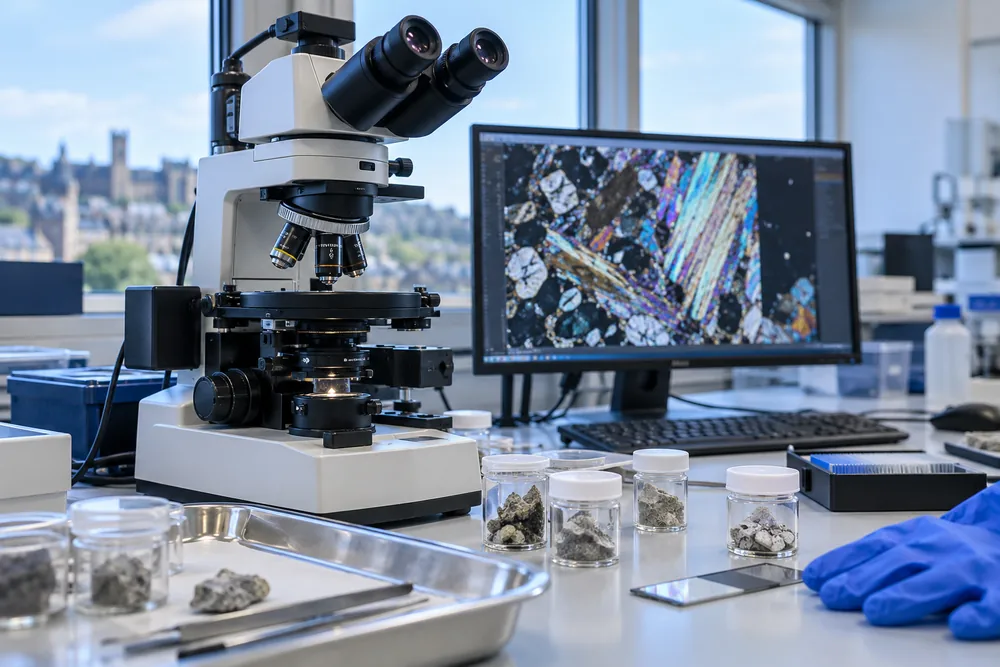
HSG248, Asbestos: The Analysts’ Guide, sets out analytical procedures. Laboratories carrying out asbestos identification must hold the appropriate accreditation. Check that the proposed laboratory has the relevant UKAS scope for bulk identification rather than relying on a general reference to testing.
How A Testing Enquiry Progresses
First, describe the material, its location and its condition without touching it. Include the property postcode and whether work has already started. Existing survey references and clear photographs taken from a safe position can help the sampling visit to be planned.
Next, agree safe access and the sampling scope. The sampler records the location, collects material under suitable controls and sends it for laboratory analysis. Each reference should remain traceable from the property record to the sample certificate.
Finally, read the result with the surrounding information. A positive sample needs appropriate management or work planning, while a negative sample does not clear unrelated materials. Ask for clarification if the certificate alone does not explain which surface or layer was tested.
Understanding A Positive Or Negative Result
A positive bulk sample identifies asbestos in the submitted material. It does not by itself measure airborne exposure or decide whether immediate removal is required. Condition, accessibility and the intended disturbance still matter when selecting the next step.
A negative result applies to the material examined under the agreed method. It cannot confirm that hidden insulation, another floor finish or a separate roof panel is asbestos-free. Where a finding does not match the planned work scope, ask whether further inspection or separate samples are needed.
What Affects Testing Costs
The number of distinct materials, the access required and whether a site visit is needed affect the quotation. A readily accessible intact finish is a different sampling task from material high above an occupied workspace. Multiple layers or separate locations may require separate sample references and analysis.
Ask whether the quote covers collection, analysis, certificates and advice on the result. Agree the proposed turnaround with the firm rather than assuming a fixed service time. If a project depends on the result, explain that dependency before booking the visit.
If Material Has Already Been Disturbed
Stop work and avoid further access to the affected area where this can be done safely. Do not sweep debris, use an ordinary vacuum cleaner or handle fragments to see what they are. Seek competent advice about assessing the disturbance and controlling the area.
Material testing may be one part of the response, but it is not a substitute for a site-specific assessment. An analyst may advise whether air monitoring is relevant to the circumstances. An ordinary material certificate alone cannot authorise people to return to a potentially contaminated work area.
Your Questions, Answered
Can A Photo Identify Asbestos?
A photo cannot identify asbestos reliably because many products look similar. A competent sampler and laboratory analysis are needed to confirm whether a suspect material contains asbestos. You can send a photo to explain your enquiry, provided it can be taken safely without touching or disturbing the material.
Does A Negative Test Clear The Whole Property?
A negative asbestos test does not clear the whole property. It relates to the material submitted for analysis and the sampling location recorded. Other finishes, hidden layers and materials elsewhere may need separate investigation, particularly when construction or maintenance will disturb areas outside the original testing scope.